
THE ÄERDSCHËFF ASBL APPROACH
Understand the connections.
Expand the possibilities.
Non-formal education in Luxembourg: understand a situation, welcome other experiences and build responses together.
Head, heart,
hands.
Start with lived experience
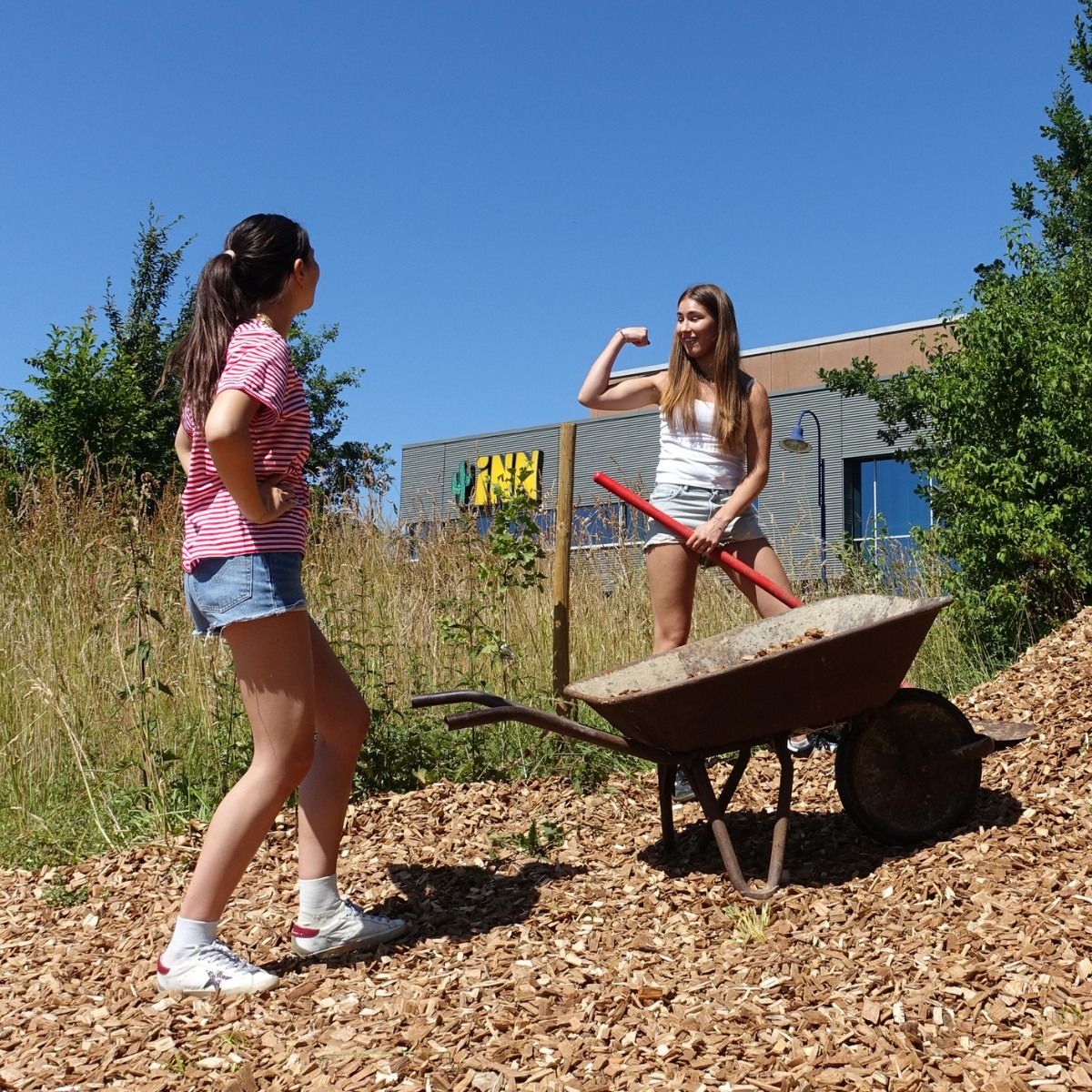
A journey to school, a building, an everyday object: our workshops start with concrete situations to open up questions. An active, cooperative approach invites participants to observe, investigate, compare perspectives and test ideas. Everyone brings their knowledge and experience; the group learns to distinguish facts, hypotheses and disagreements.
Make interdependencies visible
Our work on sustainable mobility connects energy, materials, health, justice and the organisation of places. Behind a journey lie infrastructure, resources, time, rules and unequally distributed opportunities for access. We examine these systems and their conditions without judging individual choices. A journey thus becomes a starting point for ecological transformation and the conditions of a habitable world.
Bring subjects into dialogue
A shared question can draw on geography to understand a place, science to examine energy flows, mathematics to compare data, or the arts to give shape to a proposal. Students connect these contributions in an outcome to discuss: a map, investigation, argument or prototype. With teachers, we clarify each contribution, the connections between sessions and what students can apply elsewhere.
Develop the capacity to act
Cooperation also means listening to needs, making disagreements open to discussion and revising an idea through contact with others. We invite participants to examine a proposal’s effects, the resources it requires and the people concerned. Through a low-tech approach, its usefulness, accessibility, resource use and maintenance become collective questions. The aim is to develop judgement and the ability to act together, taking planetary boundaries and social justice into account.
An example of a shared question
“How can we make the journey to school manageable for more students?” This question can connect an investigation into journeys, an understanding of the local area and the design of a reasoned proposal. The group identifies whom to involve, what information is missing and the conditions for a possible trial. The programme and its adaptation to the class are developed with the team.
Try things out, then discuss them.
After an activity, we revisit observations, choices and disagreements. The debrief helps distinguish what we have learned, what remains uncertain and the conditions for a next trial.
Find a workshop ↗ Build a project ↗ Explore the serious games ↗