A future-oriented political strategy game by Äerdschëff
Horizon Lab 2040
Les Mille Jours
A thousand days to make ecological transformation practicable.
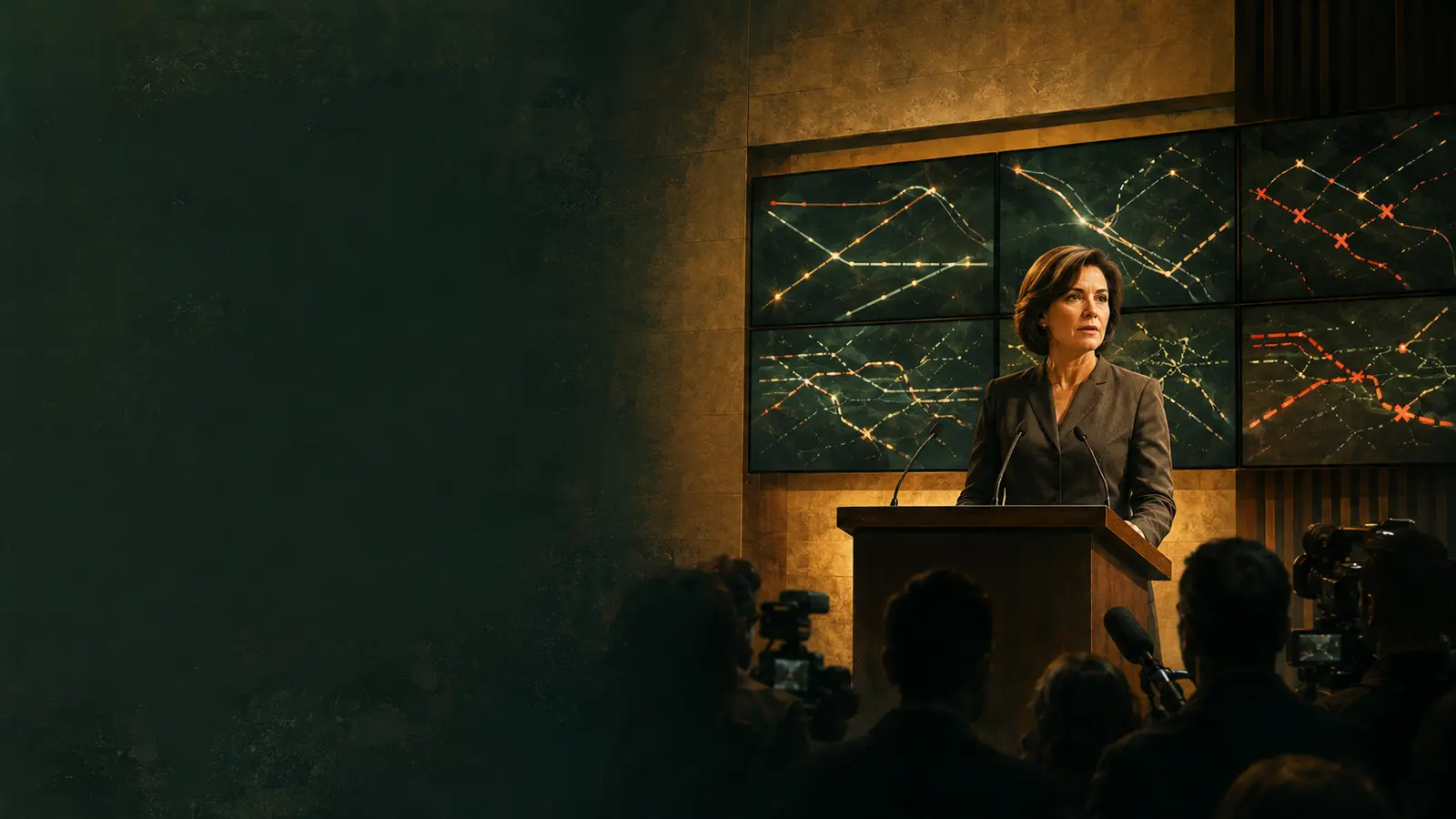
Oil is becoming scarce and expensive. The availability of cross-border workers is falling. Mobility, essential services and economic activity are coming under pressure.
Your mission
From crisis to tested public capacity
You have a thousand simulated days to understand the situation, choose a role, consult stakeholders, develop a strategy, build a coalition and lead a local experiment through to evaluation.
The thousand days represent an initial cycle of public action. They connect the immediate response, mandate, funding, local adoption, authorisations, operation and handover. The 2040 horizon gives a direction. The thousand days make it possible to begin, learn and consolidate the capacity to act.
An ally from a possible future
ARIANE arrives from 2040
“I’m returning from 2040. We succeeded in making ecological transformation practicable. I can show you the decisions, coalitions and capacities that opened up this path.”
ARIANE supports the game by asking context-sensitive questions, explaining causal relationships and helping players review their choices. In a group session, authority over safety, arbitration and decisions remains with the people present.

The timeline
Five acts to make complexity manageable
Protect
Respond to disruptions, protect essential services and investigate needs.
Establish a mandate
Build the coalition, clarify responsibilities and prepare resources.
Decide
Turn the coalition into public decisions, funding and adoption.
Operate
Bring together authorisations, equipment and skills, then test the pilot.
Pass it on
Evaluate results, revise commitments and prepare the next steps.
At the heart of the game
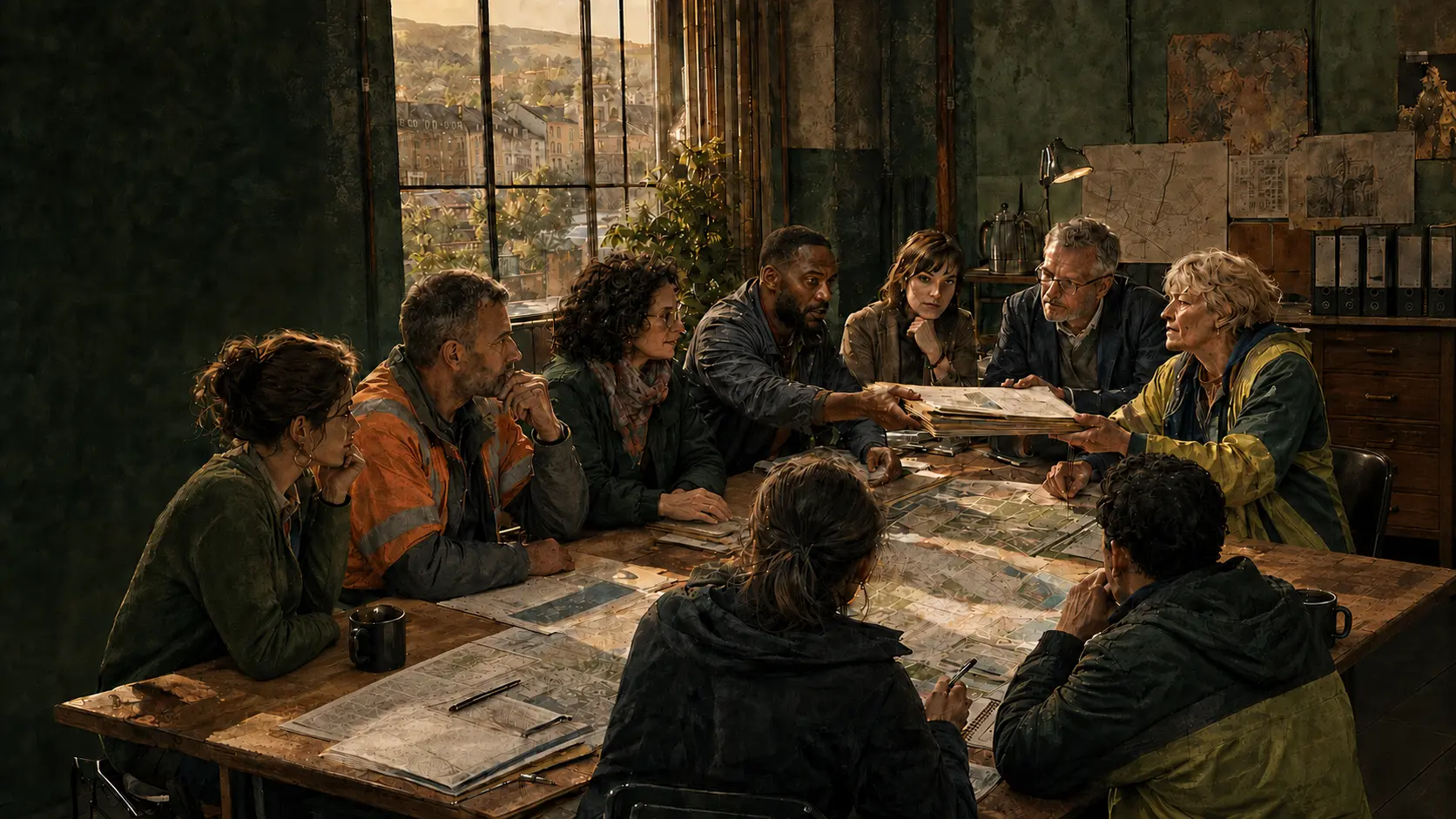
Choose, consult, negotiate, test
- Choose your position and mandate.
- Understand the territory’s needs and dependencies.
- Consult relevant stakeholders.
- Develop a coherent strategy.
- Build a coalition.
- Run a pilot.
- Review your pathway and pass on what you have learned.
Understanding public action
Distributed and coordinated responsibilities
The European Union establishes common frameworks. The state defines national law, policies and some funding. Regional structures coordinate municipalities. Municipalities deliberate within their responsibilities. Services and operators prepare and then run authorised solutions.
The game helps identify who can act, when, with what resources and under which conditions. The chain becomes understandable: need, assessment, adoption, funding, authorisation, assignment, preparation, operation, evaluation and handover.
Game modes
Choose your experience
Individual game
30–45 minutes. Follow your pathway on one device. The local save can be downloaded and resumed on another device.
Group session
120 or 240 minutes, for 2–12 people. The group assigns roles, negotiates a shared strategy and analyses the effects. Äerdschëff facilitates the pilots.
Facilitator training
The programme gradually develops observation, leading short sequences, human intervention and facilitation of a full session.
Inclusive review
Real-world use transforms the project
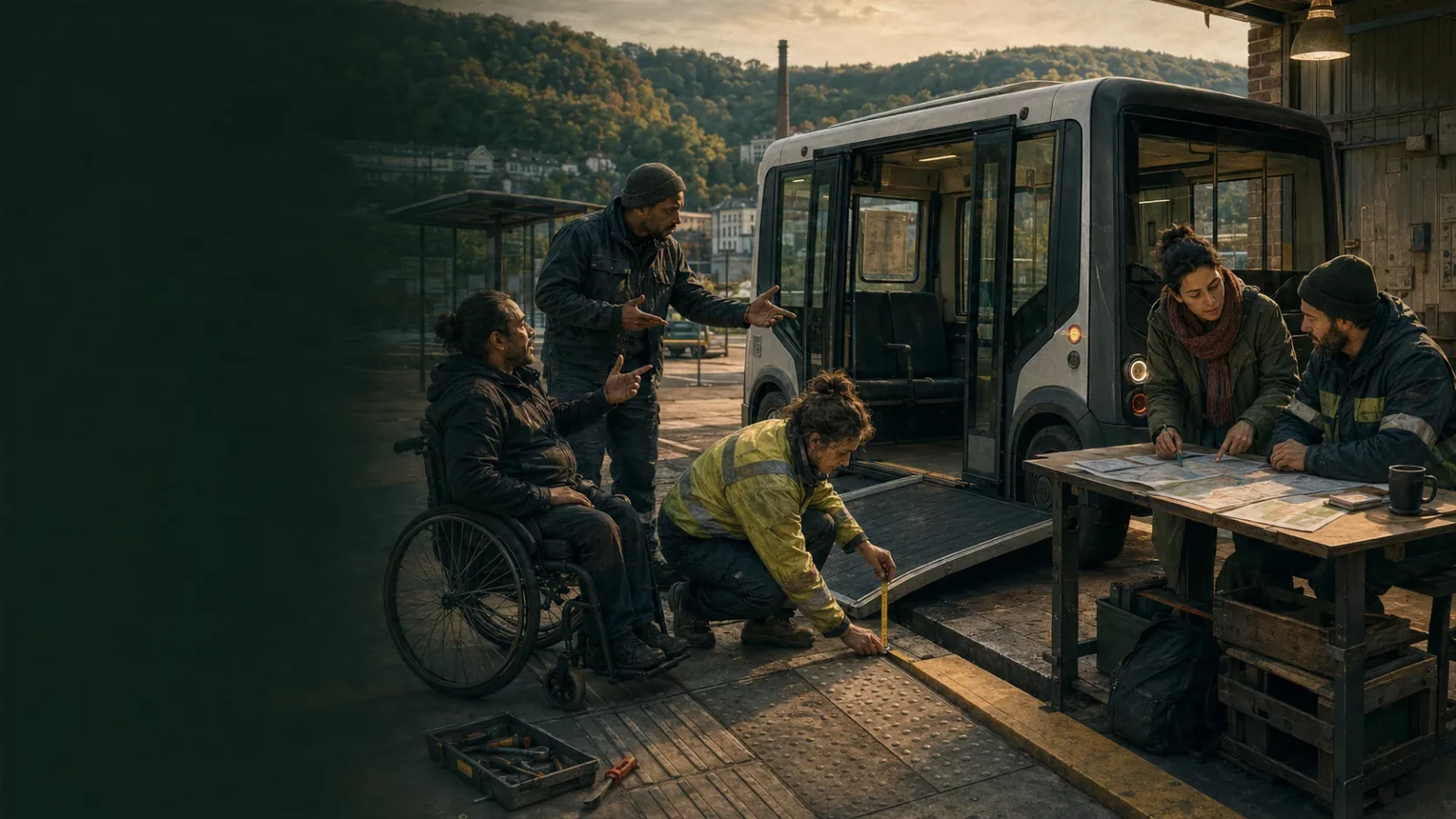
The pilot tests intentions against operating conditions, professions and the people affected. A measure can be corrected, revised, suspended or passed on. Its history remains visible in the review.
The debrief connects decisions, stakeholders, commitments, capacities, tensions and observed effects. It reveals practical ways to support or initiate action.
The territory changes
Compare the starting point with the capacities built


Accessibility and data
Different ways to understand and interact
Interface
Step-by-step guidance, readable contrasts, keyboard navigation, animation controls and text alternatives.
Group play
Spoken or written participation, printable materials, distributed roles and adjustments agreed with the group.
Saving
The individual game stays on the device. A versioned file allows it to be transferred. Any future data collection will be explained before activation.
Frequently asked questions
Before entering Les Mille Jours
What do I need to know to play?
The game gradually introduces the responsibilities and stakeholders relevant to each decision.
Does the game work on smartphones?
The web pilot adapts to mobile screens. Installable versions for Windows, macOS, Android and iPhone are on the roadmap.
How can I organise a group session?
Äerdschëff supports the first pilots, in person or remotely, in 120- or 240-minute formats.
Where is the game saved?
The browser saves the game on the device. The management button lets you download a JSON backup and import it elsewhere.
