





When the testing of Karbikes sparks collective reflection on LIVs
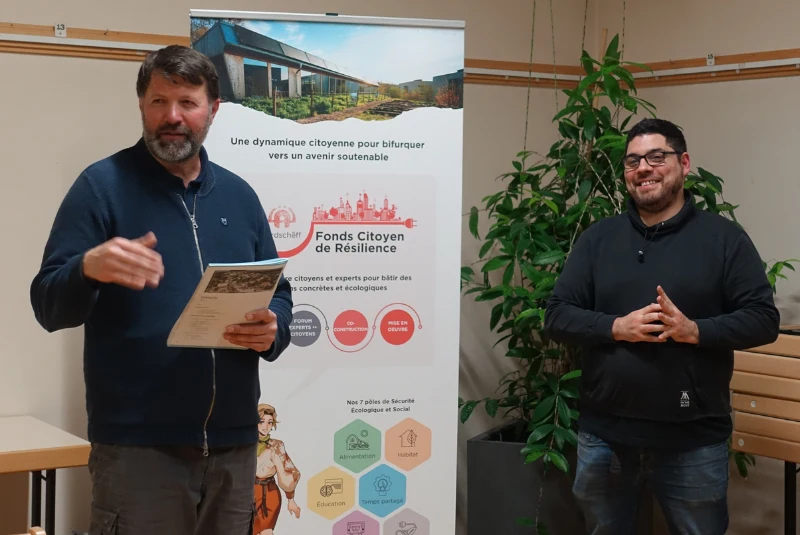
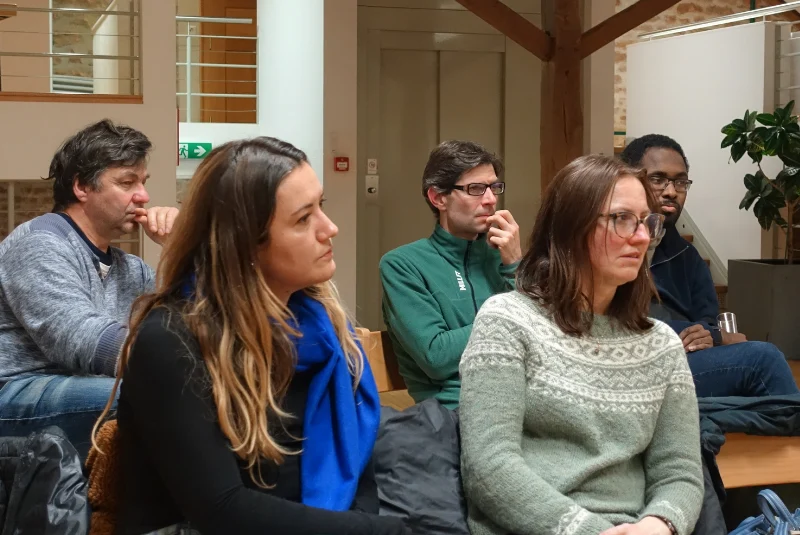
On December 17, 2025, the Kultur a Geschichtshaus “A Gadder” in Belvaux hosted an Expert-Citizen Forum dedicated to sustainable mobility. Organized by Äerdschëff asbl, this event brought together citizens, associations, experts, and local stakeholders to discuss a central question for the future of Luxembourg:
How can we develop useful, desirable, and truly suitable intermediate light vehicles (ILVs) for the region?
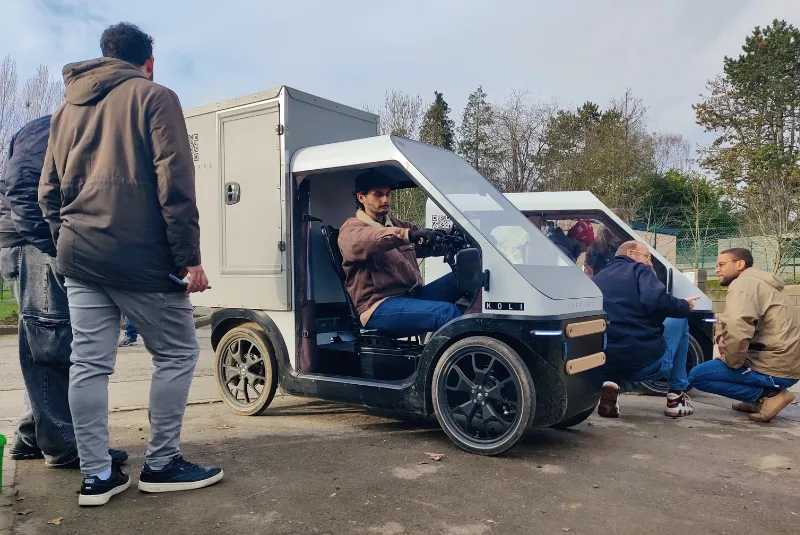
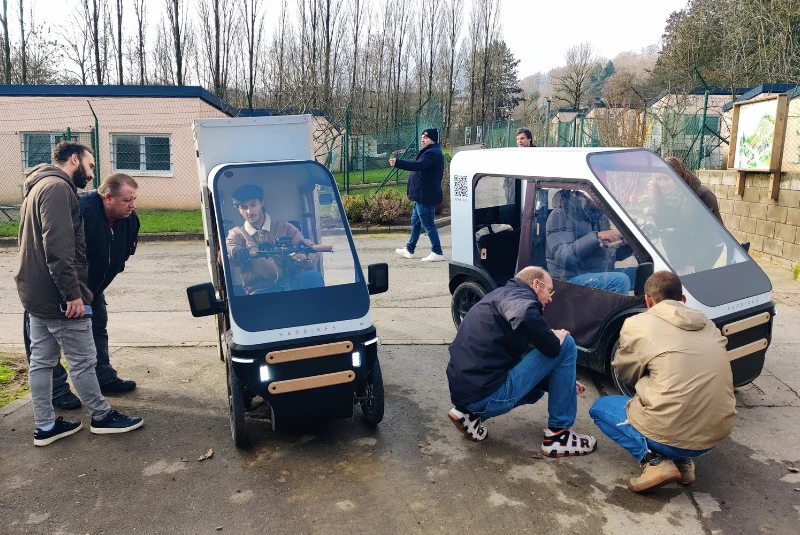
During the day, about fifteen people, along with Alderman Steve Gierenz from the commune of Sanem, were able to test and were impressed by Karbikes, electric-assist quadricycles limited to 25 km/h, compatible with cycle paths and designed according to low-tech and energy-saving principles.
A strong potential for adoption
Feedback collected via a questionnaire after the trials showed high overall satisfaction. Those who tested the Karbikes described a reassuring, accessible, and surprisingly intuitive experience, even for those who didn’t initially consider themselves cyclists.
A positive response to expectations and daily transportation needs, comfortable seats, good visibility, and a feeling of stability were frequently mentioned in the feedback. Several participants emphasized that the weather protection significantly changed their perception of active transportation, making it a viable option even in bad weather—a common obstacle for traditional bicycles in Luxembourg.
The trials also allowed for testing the Karbikes on a variety of routes, ranging from urban areas with light traffic to secondary roads and parking maneuvers. This diversity of uses reinforced the idea that the vehicle can be adapted to very different contexts.
Clearly identified daily uses
The questionnaire responses indicate that the Karbikes is perceived as suitable for several types of daily journeys. Local travel, leisure activities, certain light professional uses, and short-distance deliveries emerged as credible use cases. Several respondents also mentioned its potential for multimodal journeys, particularly for the “last mile.”
A majority believe that this type of vehicle could meet real daily transportation needs, provided it receives adequate support. The Karbike is therefore not seen as a niche product, but as an intermediary tool capable of bridging the gap between cycling and driving.
Recommendation, but with clear conditions
Participants are generally in favor of recommending the Karbike to a friend or family member, often with a nuance: “yes, probably,” rather than unconditional enthusiasm. This caution reveals a clear-eyed view of the conditions for deployment.
Citizens highlighted several key expectations. The issue of range and battery management remains central, especially for longer journeys. Some emphasized the need for a learning curve to fully understand how the vehicle works and optimize its use. These findings confirm that adoption depends as much on training as on the technology itself.
From an economic standpoint, the idea of a lease that includes maintenance and repairs is well received. A large proportion of respondents envision a moderate monthly budget, which reinforces the appeal of models supported by municipalities, schools, or public institutions, rather than systematic individual purchase.
The vehicle alone is not enough: towards a local ecosystem
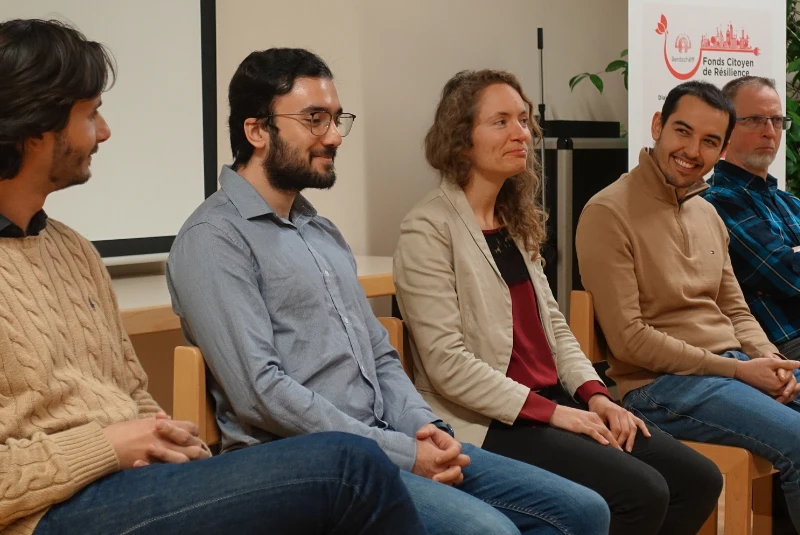
These comments echo the discussions at the roundtable held during the forum. The participants—from the worlds of cycling, entrepreneurship, and mobility—emphasized that Karbikes is first and foremost a starting point for broader reflection.
The discussions highlighted a strong consensus: the development of light-duty vehicles cannot succeed without a structured local ecosystem, combining clear infrastructure, accessible services, and a culture of sustainable mobility. Repairability, local access to parts, and the ability of municipalities to handle maintenance internally emerged as key conditions for sustainability.
In this context, the idea of an inter-municipal center dedicated to light-duty vehicles emerged as a structuring approach. Such a center would allow for testing, training, repair, support, and documentation of usage, while fostering gradual adoption by citizens and institutions.
A Foundational First Step
The Karbike trials and questionnaire responses show that there is genuine interest, but also that the transition will not be achieved through a miracle product or a simple technological shift. It requires time, learning, trust, and collective organization.
This Expert-Citizen Forum thus marks a foundational first step in the Lët’z do it – Imagination powered transition program. The next steps will involve further exploring this user feedback, strengthening local partnerships, and transforming this collective knowledge into concrete experiments across the region.
Sustainable mobility cannot be decreed. It is built, on a human scale, through trial, dialogue, and the application of imagination.
📩 Interested in participating in the next phase of the project or testing a Karbike in the upcoming stages?
Contact: team@aerdscheff.lu
📱 Follow Äerdschëff on social media to find out more.
