





From emotion to civic action
Participatory mechanisms, ecological governance and empowerment around sustainable mobility
Author: Tarik Bouriachi, Äerdschëff asbl
Abstract
Based on two participatory mechanisms used in the Luxembourg context of the ecological transition—forum theatre and an expert-citizen forum dedicated to sustainable mobility—this article offers an anthropological analysis of contemporary forms of citizen action. Adopting a situated research approach, it examines how these mechanisms shape social imaginaries, redistribute the regimes of knowledge legitimacy, and reconfigure the circulation of power. Far from an instrumental reading of participation, the article demonstrates that these spaces constitute political technologies that influence the governance of possibilities, making certain forms of action conceivable, practicable, and collectively legitimate.
Introduction
Participatory Mechanisms and the Governance of Possibilities
Political anthropology has historically been built around the analysis of institutionalised forms of power, their rituals, symbols, and modes of legitimation. However, contemporary transformations in public action have shifted the focus toward more diffuse, less visible, but no less structuring modalities of power. In these configurations, power is no longer primarily exercised through injunction or direct coercion, but rather through the production of frameworks for action, legitimate narratives, and subjectivities aligned with pre-existing normative horizons.
Ecological crises provide a prime opportunity to observe these transformations. They are accompanied by a proliferation of participatory mechanisms designed to “mobilise,” “raise awareness,” or “involve” citizens, while largely leaving unchanged the material and economic structures that produce these crises. The persistent gap between the density of scientific diagnoses and the weakness of actual transformations cannot therefore be interpreted as a simple lack of rationality or individual will. It points to a central question in political anthropology: how are the capacities for collective action created, distributed, and limited?
This article proposes to address this question through a comparative analysis of two distinct but interconnected participatory mechanisms: forum theatre and an expert-citizen forum dedicated to sustainable mobility. Far from being considered mere methodological tools or fully developed forms of participatory democracy, these mechanisms are understood here as political technologies in the broadest sense. They arrange bodies, discourses, emotions, and procedures, producing specific effects of power, subjectivation, and the ordering of the possible.
The central hypothesis is that these mechanisms do not primarily operate by transmitting information or seeking consensus, but by working on the very conditions of what is thinkable and feasible. They operate on social imaginaries, defining what can be said, tested, or contested, and redistributing—always partially and conflictually—the regimes of legitimacy of knowledge. In this sense, they constitute privileged observatories of contemporary forms of ecological governmentality.
The analysis is based on a situated research approach, assuming direct involvement in the mechanisms studied. This position does not aim to produce an illusory neutrality, but rather to make visible the tensions, asymmetries, and ambivalences that permeate these participatory spaces. It allows us to grasp, from the inside, how expert knowledge, citizen knowledge, and experiential knowledge are articulated, and how the boundaries between legitimate and disqualified action are negotiated.
Forum Theatre as a Device for Subjectivation
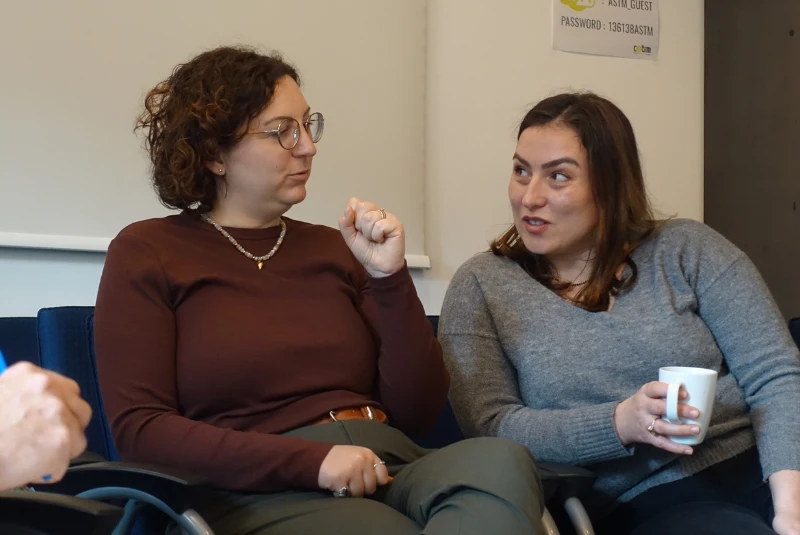
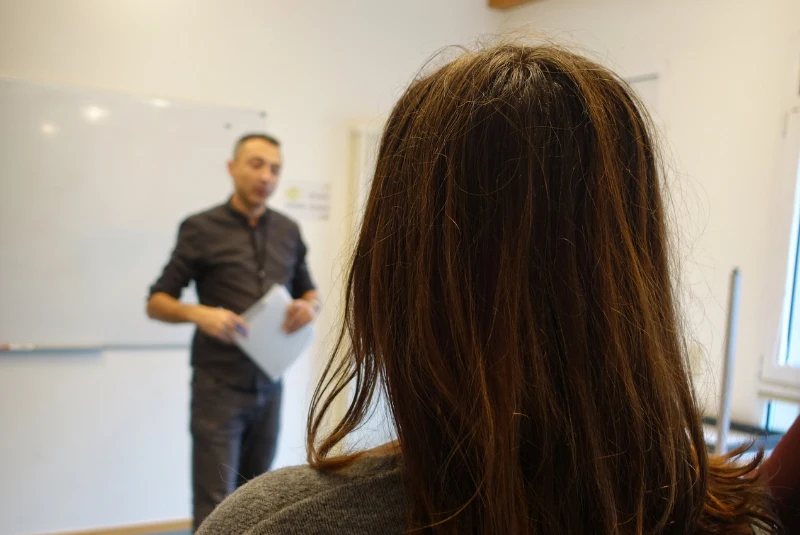
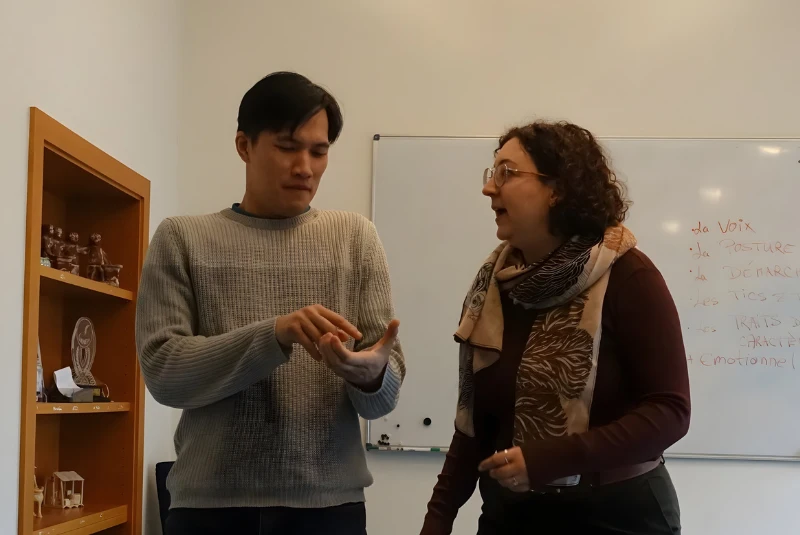
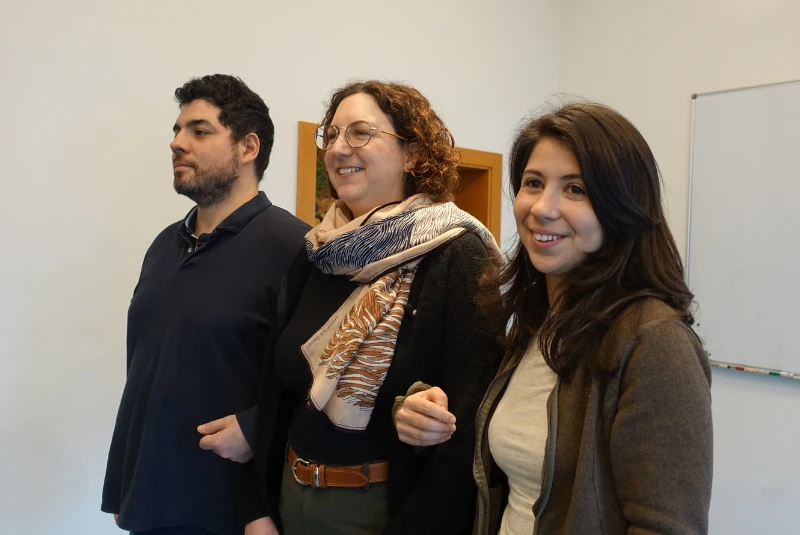
Originating from the Theatre of the Oppressed developed by Augusto Boal, forum theatre is often presented as a tool for emancipation through participation. Such an interpretation, however, tends to obscure its profoundly political dimension. By suspending the separation between stage and audience, between actors and spectators, forum theatre establishes a liminal space where social roles can be shifted, without ever being entirely abolished.
In this framework, the stage action does not simply represent situations of domination or deadlock. It reenacts them, tests them, and reconfigures them. Bodies, silences, hesitations, and emotions become agents of knowledge. The knowledge that emerges is neither prior to nor external to the action; it arises from the confrontation between unequally distributed trajectories, positions, and constraints.
My relationship to this method was shaped by my encounter with the practices of Burkinabè community theatre, particularly through the work of Prosper Kompaoré. This experience brought about a shift…
Experimentation, Materiality, and Ecological Governmentality
One of the central elements of the project was a preliminary experimental phase, organised from November 1st to 17th, 2025. Two Karbike vehicles circulated in various locations across the region—high schools, towns, fab labs—giving rise to concrete uses and situated narratives. The Strasbourg–Redange route served as a structuring narrative, making the material constraints of daily mobility perceptible.
This experimental phase brought about a decisive shift. It allowed the discussion to move beyond abstract discourse and ground it in lived materiality. The resulting narratives of use were not mere testimonies, but political resources capable of reconfiguring the boundaries between legitimate expertise and everyday experience.
From a Foucauldian perspective, these devices can be understood as technologies of ecological governmentality. They do not directly impose behavioral norms, but rather produce frameworks within which certain behaviors appear desirable, reasonable, or responsible. Light mobility is not prescribed; it is made conceivable, experimental, and gradually normalised.
Circulation of Power and Ambivalences of Participation
Participatory mechanisms do not eliminate power; they redistribute it. In forum theater, this circulation is observed in the figure of the joker, holder of a paradoxical authority: guarantor of the framework without prescribing solutions. In the expert-citizen forum, it manifests itself in the ability of certain actors to translate their experience into arguments acceptable in the deliberative space.
These ambivalences constitute the analytical core of this article. They show that participation cannot be evaluated solely in terms of formal inclusion or operational results. It must be analysed as a conflictual process, traversed by power dynamics, legitimation strategies, and forms of governance of subjectivities.
Conclusion
Participatory Mechanisms and the Politics of Possibility
By comparing forum theatre and an expert-citizen forum dedicated to sustainable mobility, this article sought to examine the anthropological conditions of citizen action in a context of ecological transition. Far from appearing as external alternatives to power, these mechanisms prove to be privileged sites for its recomposition.
They participate in a politics of possibility, in the sense that they do not directly determine behaviors, but rather work on the frameworks within which certain actions become conceivable, legitimate, and desirable. In this sense, they fully belong to a contemporary ecological governmentality, based on the activation of subjectivities rather than on explicit constraint.
This analysis invites us to move beyond a simplistic opposition between participation and domination. Participatory mechanisms appear as ambivalent spaces, simultaneously producing openness and carrying new forms of normalization. Their anthropological interest lies not in their promise of emancipation, but in their capacity to make visible the tensions between power, knowledge, and action.
In a context marked by the ecological emergency, these mechanisms are neither miracle solutions nor democratic alibis. They are arenas where the very possibility of collective action is played out in a situated and conflictual manner. It is for this reason that they deserve to be taken seriously by political anthropology, not as marginal objects, but as central operators in the contemporary governance of societies.
References
- Boal, Augusto. Theatre of the Oppressed. Paris: La Découverte.
- Blondiaux, Loïc. The New Spirit of Participatory Democracy. Paris: Seuil.
- Castoriadis, Cornelius. The Imaginary Institution of Society. Paris: Seuil.
- Foucault, Michel. Microphysics of Power. Paris: Gallimard.
- Foucault, Michel. Security, Territory, Population. Paris: Gallimard.
- Turner, Victor. The Ritual Process: Structure and Anti-Structure. Chicago: Aldine.
- Äerdschëff asbl. Experts-Citizens Forum “Sustainable Mobility.” Framework Note, December 17, 2025.
